Showing posts with label the wicker man. Show all posts

Tuesday, February 1, 2022

WOODLANDS DARK AND DAYS BEWITCHED: A HISTORY OF FOLK HORROR (March 2021)


WOODLANDS DARK AND DAYS BEWITCHED:
A HISTORY OF FOLK HORROR
(March 2021)

“Folk horror very much channels people’s relationship to the land, to this sort of shared consciousness, these traditional beliefs that are somehow in the soil, in the landscape.
--Kat Ellinger
   Editor, Diabolique Magazine
 
Writer/director Kier-La Janisse brings us the incisive and absorbing 3-hour plus documentary Woodlands Dark and Days Bewitched, which is, as its subtitle indicates, an expansive study of folk horror, from its literary roots onto its notable presence on both the film and television mediums.
 
“Like any decent piece of work, [The Wicker Man] survives. It has, coiled at the heart of it, a mystery. Peter Pan has it. It’s overtly a very silly play. But it isn’t, because it’s about something other than what its surface purports to be.”
--Anthony Schaffer
   Writer, The Wicker Man
 
If you’re the sort of horrorhead who loves to delve beneath the surface, who is (to use a morbidly appropriate analogy) drawn to rummage amidst the bloody innards of the slaughtered sacrificial lamb to see what makes it what it is, to study its innate lamb-ness as it were, then Woodlands… is, as they say, a “must-see”.
 
“Generally speaking, we wanna believe that the thoughts and fears and beliefs of a past generation, we’ve sort of transcended them, we’ve grown out of them, we’re above them. Horror films always pose this problem that in fact, it’s not as simple as that.”
--John Cussans
   Author, Undead Uprising: Haiti, Horror and the Zombie Complex
 
There’s a host of experts and writers and filmmakers interviewed during its runtime, and a whole bunch of films are touched on, including a number of personal favorites and titles that have been mentioned ‘round these parts.
As such, I could just go on and on with the quotes, but I imagine I should just leave you with this…

“So I think it’s super-interesting how these myths are, like, all around the world, they just have different names, and we make it local.”
--Abraham Castillo Flores
   Head Programmer, Morbido Film Festival
 
The fifth (and penultimate) chapter of the documentary, “All the Haunts Be Ours: Folk Horror Around the World,” is a key section that further expounds on the definition of folk horror and expands its borders to make room for a more diverse catalogue of titles beyond the usual suspects like The Wicker Man.
 
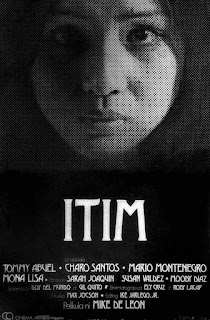
It’s somewhere towards the end of that section though, that I was starting to despair of seeing any kind of Philippine representation, when lo and behold, the film I consider, hands down, the best horror film our shores have managed to produce (and by this, I also mean it’s one of the best horror films ever made, regardless of country of origin) appears here under its international title, The Rites of May.
Go, Mike de Leon!
 
So, yes, check this out if you’ve a mind to, as it also makes the sobering case for the timeliness of folk horror in this very fraught moment in our race’s history…
 
“And ‘We don’t go back’ is the fundamental tension of folk horror.”
--Howard David Ingham
   Author, We Don’t Go Back: A Watcher’s Guide to Folk Horror
 
(Woodlands Dark and Days Bewitched: A History of Folk Horror Blu-ray cover art courtesy of bloody-disgusting.com; Itim OS courtesy of imdb.com.)

Thursday, October 10, 2019


13 Slots for the Best Horror I've Seen in the Past Year
[13 of 13]


MIDSOMMAR
(June 2019)


i cant anymore - everything's black - mom and dad are coming too. goodbye.

That’s an email that Dani Ardor (Malevolent’s Florence Pugh) receives from her bipolar sister Terri, which we get a peek at early on in Ari Aster’s sophomore offering, Midsommar.
Like the obituary that opens Aster’s feature debut (and ¡Q horror! 2018 title) Hereditary, it’s an ominous harbinger of the torrent of grief that rages throughout the film’s runtime, as well as all the dreadful things to come, as Dani finds herself in an isolated community in Sweden where things are, quite naturally for a horror movie, not as idyllic as they seem.

I’ve always liked the folk horror subgenre, where the outsider is plunged into a close-knit community, stumbling about, ignorant of the nuances and niceties (sometimes, even the language) of this alien society, exposed to customs and traditions that, to a stranger, can be bizarre, perhaps even grotesque and repulsive.
It’s like the extreme horror movie form of FOMO, the simmering anxiety of being the only one who isn’t in on it, and in folk horror of course, not knowing what it is--until it’s far too late--can very well be the death of you…

When Midsommar takes its first decisive folk horror turn, it’s a powerful and potent sequence, and once that takes place, it is, as they say, all downhill from there, at least for Dani and company…
More questionable incidents then take place, but each character’s personal issues and preoccupations cloud their awareness of the fact that things are very wrong in “… The tranquil and majestic Hårga.”

 
All things considered, Midsommar navigates the folk horror seas exceptionally well, because there is, after all, a giant lying in the folk horror depths.
Said giant is, of course, Robin Hardy’s The Wicker Man, one of those particularly singular titles that forever casts its long and intimidating shadow over all the other films of its type that follow. Like The Exorcist and possession movies, or Jaws and shark movies, any folk horror title made after 1973 needs to walk in The Wicker Man’s shade.*
But thanks to Aster’s firm directorial and narrative grasp (as well as DP Pawel Pogorzelski’s eye), there is more than enough glaring sunlight to drive away The Wicker Man’s shadow, at least for the spell-like duration of Midsommar’s length, enough time for Aster to weave an insidious tale that cautions that the insularity and isolation of any community has the potential to breed horrors.

I suspect that there will be a portion of the audience that will feel Midsommar is not quite as “scary” as Aster’s first horror effort, Hereditary.
But, while that may or may not be true, what I can say is, Midsommar is one effed-up title--and I mean that in the nicest possible horror movie way.
It’s a film that showcases the horrifying beauty of community, where one is never left alone, and where all emotions--joy, ecstasy, grief, or horror--are felt in unity.
Much like a theatre full of people, witnessing Midsommar’s sundrenched terrors in the climate-controlled dark.

* So complete and intimidating is that shadow that not even Hardy’s own “spiritual sequel,” The Wicker Tree, could hope to hold its own…

Parting Shot 1:
Frankie Valli’s “The Sun Ain’t Gonna Shine (Anymore)” plays over the end credits roll…
Man, Aster really knows how to pick a closing song…

Parting Shot 2:
There is what may (or may not) be a swipe at Neil LaBute’s ill-fated 2006 remake of The Wicker Man towards Midsommar’s end…
I leave it up to the viewer to decide…

Parting Shot 3:
I’m looking forward to the opportunity to check out the longer-by-23 minutes Director’s Cut…
Yay! More folk horror goodness!

“Yeah, it’s sort of a crazy nine-day festival my family’s doing. Lots of pageantry…”
“Uh-huh.”
“… special ceremonies, and dressing up.”
“That sounds fun.”
“It’ll probably seem very silly. But, it’s like theatre.”

(Midsommar OS’ courtesy of impawards.com.)

Thursday, September 26, 2019


¡QUÉ HORROR2019
Candidate #24

MIDSOMMAR
(June 2019)


i cant anymore - everything's black - mom and dad are coming too. goodbye.

That’s an email that Dani Ardor (Malevolent’s Florence Pugh) receives from her bipolar sister Terri, which we get a peek at early on in Ari Aster’s sophomore offering, Midsommar.
Like the obituary that opens Aster’s feature debut (and ¡Q horror! 2018 title) Hereditary, it’s an ominous harbinger of the torrent of grief that rages throughout the film’s runtime, as well as all the dreadful things to come, as Dani finds herself in an isolated community in Sweden where things are, quite naturally for a horror movie, not as idyllic as they seem.

I’ve always liked the folk horror subgenre, where the outsider is plunged into a close-knit community, stumbling about, ignorant of the nuances and niceties (sometimes, even the language) of this alien society, exposed to customs and traditions that, to a stranger, can be bizarre, perhaps even grotesque and repulsive.
It’s like the extreme horror movie form of FOMO, the simmering anxiety of being the only one who isn’t in on it, and in folk horror of course, not knowing what it is--until it’s far too late--can very well be the death of you…

When Midsommar takes its first decisive folk horror turn, it’s a powerful and potent sequence, and once that takes place, it is, as they say, all downhill from there, at least for Dani and company…
More questionable incidents then take place, but each character’s personal issues and preoccupations cloud their awareness of the fact that things are very wrong in “… The tranquil and majestic Hårga.”

 
All things considered, Midsommar navigates the folk horror seas exceptionally well, because there is, after all, a giant lying in the folk horror depths.
Said giant is, of course, Robin Hardy’s The Wicker Man, one of those particularly singular titles that forever casts its long and intimidating shadow over all the other films of its type that follow. Like The Exorcist and possession movies, or Jaws and shark movies, any folk horror title made after 1973 needs to walk in The Wicker Man’s shade.*
But thanks to Aster’s firm directorial and narrative grasp (as well as DP Pawel Pogorzelski’s eye), there is more than enough glaring sunlight to drive away The Wicker Man’s shadow, at least for the spell-like duration of Midsommar’s length, enough time for Aster to weave an insidious tale that cautions that the insularity and isolation of any community has the potential to breed horrors.

I suspect that there will be a portion of the audience that will feel Midsommar is not quite as “scary” as Aster’s first horror effort, Hereditary.
But, while that may or may not be true, what I can say is, Midsommar is one effed-up title--and I mean that in the nicest possible horror movie way.
It’s a film that showcases the horrifying beauty of community, where one is never left alone, and where all emotions--joy, ecstasy, grief, or horror--are felt in unity.
Much like a theatre full of people, witnessing Midsommar’s sundrenched terrors in the climate-controlled dark.

* So complete and intimidating is that shadow that not even Hardy’s own “spiritual sequel,” The Wicker Tree, could hope to hold its own…

Parting Shot 1:
Frankie Valli’s “The Sun Ain’t Gonna Shine (Anymore)” plays over the end credits roll…
Man, Aster really knows how to pick a closing song…

Parting Shot 2:
There is what may (or may not) be a swipe at Neil LaBute’s ill-fated 2006 remake of The Wicker Man towards Midsommar’s end…
I leave it up to the viewer to decide…

Parting Shot 3:
I’m looking forward to the opportunity to check out the longer-by-23 minutes Director’s Cut…
Yay! More folk horror goodness!

“Yeah, it’s sort of a crazy nine-day festival my family’s doing. Lots of pageantry…”
“Uh-huh.”
“… special ceremonies, and dressing up.”
“That sounds fun.”
“It’ll probably seem very silly. But, it’s like theatre.”

(Midsommar OS’ courtesy of impawards.com.)