+blog.jpg)
+banner+blog.jpg)
+4.jpg)
THE EYE
(Review)
First, a few words regarding my thoughts on the Pang Brothers’ original Khon Hen Phi.
Though it did have its moments, I have two main problems with it.
One: there were several stretches of the film where the tension was not quite at a level that could sustain the narrative and maintain my interest in the on-screen proceedings.
Two: that climax seemed rather jarring given all the largely low-key bits that had come before it. I always considered that sequence a little too Hollywood a capper for this otherwise very Asian horror film.
So it seemed rather appropriate that an English-language remake would spring into being. And though I was looking forward to it when Hideo Nakata’s name was floating around the property, it eventually fell into the laps of French directing duo, David Moreau and Xavier Palud. Now, their Ils (Them) grabbed enough of my attention to at the very least warrant my interest in their redux, so it was with, what I termed in my Ils review (located in the Archive), “a healthy sense of anticipation,” that I approached The Eye.
What I got was a mixed bag: though The Eye has, like its predecessor, some moments, and that Hollywood climax seems slightly more at home here, the problem of the narrative sustaining its own tension is, sadly, still evident.
Now, as I’d expected, both Alessandro Nivola (as Patrick Faulkner) and Parker Posey (as Helen Wells) carry their own weight here, though Posey flies in and out of the narrative pretty quickly. (Appropriately enough, she’s a stewardess.)
What came as a surprise is that Jessica Alba (as blind violinist Sydney Wells, whose cornea transplant suddenly gives her both normal, and second, sight) actually delivers a passably effective performance, probably the best I’ve seen from her.
Though she does miss a beat here and there, it’s still commendable that she’s clearly stretching here. So long as she steers clear of any future Fantastic Four malarkey, there could still be some hope for her.
It was, however, disappointing that Moreau and Palud couldn’t capture that same sense of tension they nailed in Ils.
I actually had the same reaction to Alexandre Aja’s follow-up to Haute Tension, his remake of The Hills Have Eyes, that it wasn’t as taut as his previous film. Of course, in both cases, the set-up for Ils and Haute Tension is such that the majority of the on-screen action—of the stalk and slay variety—occurs in a rather short amount of time.
Now, while in The Hills Have Eyes, the tension seemed to dissipate since it became spread out over a number of different characters, in The Eye, it ended up defused by the nature of the narrative itself.
There just doesn’t seem to be an adequate amount of atmosphere and suspense to tide the audience over and keep them on the edge, even during the slow bits.
I do however, give props to Patrick Lussier, whose editing, though not exactly brilliant, is quite effective in a number of spots.
Though having mentioned Lussier, I do have to mention something else.
There was talk that floated last year about re-shoots for The Eye that did not involve Moreau or Palud, and that in fact, Lussier was the man who came in to handle them.
It’s a distinct pain that this is becoming a frequent practice, particularly when the film is the first Hollywood project for a foreign director (it’s reportedly happened to the Pang Brothers’ The Messengers, Oliver Hirschbeigel’s The Invasion, and Xavier Gens’ Hitman, to name a few).
To be fair though, The Eye is certainly better than either The Messengers or Hitman. It’s also not as severely compromised as The Invasion. In point of fact, if the Frenchmen were indeed not involved with those re-shoots, then it isn’t plainly evident where those new bits are in the overall picture.
As far as the film’s stand-out moments go though, they don’t quite measure up to the original’s.
If it’s two things I took away from Khon Hen Phi, it was the long-tongued ghost licking obscenely at some meat (sadly gone in this version) and the floating elevator dude (present here, though I do recall finding the original’s take far creepier).
And though I did say the climax felt a little more at home here, this version of the sequence also went whole Hollywood hog with the idea, complete with incidental car chase. Also, as I recall, in Khon Hen Phi, there were some casualties. (Weren’t there? It has been awhile since I’ve seen it…)
Here, Sydney apparently gets everyone out alive.
Sure, this is post-9/11 America, but I suspect it’s really because of one thing: this is Hollywood, people, so the victories have to be grander, don’t they, the triumphs more complete and all-encompassing.
As it is, we’re lucky they still kept the “blessing in disguise” outcome, so the climactic victory still came at an apparent cost.
Ultimately, The Eye is an acceptable English-language remake, and though I can’t really say it’s significantly better than the original, neither is it particularly worse. All in all, a passable way to while away some time. On the heels of what Moreau and Palud achieved with Ils though, this is, admittedly, a bit of a let-down.
Parting shot: Reviews of Ils, both Fantastic Four installments, The Messengers, Hitman, and The Invasion can be found in the Archive.
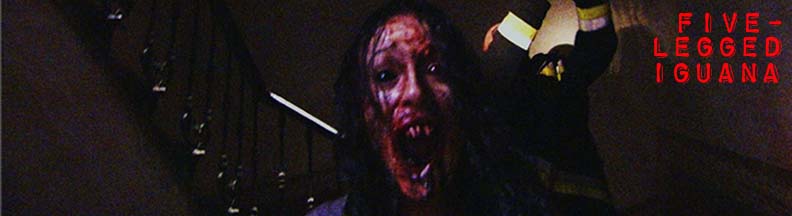
(The Eye OS, banner, and image courtesy of bloody-disgusting.com.)
(Review)
First, a few words regarding my thoughts on the Pang Brothers’ original Khon Hen Phi.
Though it did have its moments, I have two main problems with it.
One: there were several stretches of the film where the tension was not quite at a level that could sustain the narrative and maintain my interest in the on-screen proceedings.
Two: that climax seemed rather jarring given all the largely low-key bits that had come before it. I always considered that sequence a little too Hollywood a capper for this otherwise very Asian horror film.
So it seemed rather appropriate that an English-language remake would spring into being. And though I was looking forward to it when Hideo Nakata’s name was floating around the property, it eventually fell into the laps of French directing duo, David Moreau and Xavier Palud. Now, their Ils (Them) grabbed enough of my attention to at the very least warrant my interest in their redux, so it was with, what I termed in my Ils review (located in the Archive), “a healthy sense of anticipation,” that I approached The Eye.
What I got was a mixed bag: though The Eye has, like its predecessor, some moments, and that Hollywood climax seems slightly more at home here, the problem of the narrative sustaining its own tension is, sadly, still evident.
Now, as I’d expected, both Alessandro Nivola (as Patrick Faulkner) and Parker Posey (as Helen Wells) carry their own weight here, though Posey flies in and out of the narrative pretty quickly. (Appropriately enough, she’s a stewardess.)
What came as a surprise is that Jessica Alba (as blind violinist Sydney Wells, whose cornea transplant suddenly gives her both normal, and second, sight) actually delivers a passably effective performance, probably the best I’ve seen from her.
Though she does miss a beat here and there, it’s still commendable that she’s clearly stretching here. So long as she steers clear of any future Fantastic Four malarkey, there could still be some hope for her.
It was, however, disappointing that Moreau and Palud couldn’t capture that same sense of tension they nailed in Ils.
I actually had the same reaction to Alexandre Aja’s follow-up to Haute Tension, his remake of The Hills Have Eyes, that it wasn’t as taut as his previous film. Of course, in both cases, the set-up for Ils and Haute Tension is such that the majority of the on-screen action—of the stalk and slay variety—occurs in a rather short amount of time.
Now, while in The Hills Have Eyes, the tension seemed to dissipate since it became spread out over a number of different characters, in The Eye, it ended up defused by the nature of the narrative itself.
There just doesn’t seem to be an adequate amount of atmosphere and suspense to tide the audience over and keep them on the edge, even during the slow bits.
I do however, give props to Patrick Lussier, whose editing, though not exactly brilliant, is quite effective in a number of spots.
Though having mentioned Lussier, I do have to mention something else.
There was talk that floated last year about re-shoots for The Eye that did not involve Moreau or Palud, and that in fact, Lussier was the man who came in to handle them.
It’s a distinct pain that this is becoming a frequent practice, particularly when the film is the first Hollywood project for a foreign director (it’s reportedly happened to the Pang Brothers’ The Messengers, Oliver Hirschbeigel’s The Invasion, and Xavier Gens’ Hitman, to name a few).
To be fair though, The Eye is certainly better than either The Messengers or Hitman. It’s also not as severely compromised as The Invasion. In point of fact, if the Frenchmen were indeed not involved with those re-shoots, then it isn’t plainly evident where those new bits are in the overall picture.
As far as the film’s stand-out moments go though, they don’t quite measure up to the original’s.
If it’s two things I took away from Khon Hen Phi, it was the long-tongued ghost licking obscenely at some meat (sadly gone in this version) and the floating elevator dude (present here, though I do recall finding the original’s take far creepier).
And though I did say the climax felt a little more at home here, this version of the sequence also went whole Hollywood hog with the idea, complete with incidental car chase. Also, as I recall, in Khon Hen Phi, there were some casualties. (Weren’t there? It has been awhile since I’ve seen it…)
Here, Sydney apparently gets everyone out alive.
Sure, this is post-9/11 America, but I suspect it’s really because of one thing: this is Hollywood, people, so the victories have to be grander, don’t they, the triumphs more complete and all-encompassing.
As it is, we’re lucky they still kept the “blessing in disguise” outcome, so the climactic victory still came at an apparent cost.
Ultimately, The Eye is an acceptable English-language remake, and though I can’t really say it’s significantly better than the original, neither is it particularly worse. All in all, a passable way to while away some time. On the heels of what Moreau and Palud achieved with Ils though, this is, admittedly, a bit of a let-down.
Parting shot: Reviews of Ils, both Fantastic Four installments, The Messengers, Hitman, and The Invasion can be found in the Archive.
(The Eye OS, banner, and image courtesy of bloody-disgusting.com.)

.jpg)
+blog.jpg)
+blog.jpg)
+blog.jpg)
